Poznaj Poznań!

“Poznaj” means “meet” in Polish language. Poznań is my home city in Poland and the idea of writing this post came due to numberless queries from my international friends visiting this beautiful place to gather some of my tips in one place. Quite a challenge, as it is difficult to pick some basic facts, or personal faves I gathered during 20 years I lived there and squeeze into one post.  I will try to focus and see Poznań as a tourist, which I lately turn whenever I come back for a weekend.

Yes, it’s a perfect weekend getaway city: very vibrant, full of bars and restaurants as well as some interesting history to discover. Berlin is the closest biggest city nearby (well, Szczecin is not far away either) and it takes less than 3 hours to travel there by direct train, bus, car – or for more extreme ones: about 23 hours by bike. There are often discounts to get to Poznań: if you buy your ticket in advance (at least 3 days before your trip), you will be able to travel for 19 EUR on the Berlin-Warszawa-Express train. Ecological and fun: you will be able to see Greater Poland’s landscapes, with its pecularities such as the tallest Christ the King sculpture in the world in Świebodzin.

At a first glance, it shares some similarities with Berlin, due to the obvious proximity and the influence of over 100 years of Prussian occupation before Poland re-gaining independence in 1918. Nowadays this can be reflected the most by some monuments (like the Imperial Castle of Wilhelm II), the urbanistic planning of certain neighbourhoods and… the spoken language. Poznań’s dialect consists of many German-originated words. The closeness of Berlin has influenced also more recently the clubbing culture in the 90s and early 2000s bringing legendary Tresor club residents to regular gigs. Poznań is often referred as the most LGBT-friendly and nightlife-loving city in Poland. However, this may seem exaggerated, since Poland is unfortunately quite prone to conservative backlash.

Poznań is also an incredibly green city – parks like Citadel (with exceptional WWII exhibition and Magdalena Abakanowicz sculptures), Sołacz and lakes like Malta, Kiekrz or Strzeszynek are popular spots regardless of the season (there are also some aficionados of the winter swimming, believe me!). Lately, during summer you cannot miss city beaches opening, apart from the well-known KontenerART, there are Brzeg Wschodni and The City Beach “Na Szelągu”.

Some basic facts? It’s not as obvious tourist destination in Poland as Warsaw or Cracow, but it is where the first bishophric of Poland was established in 10th century, so for history-loving people a visit in the Ostrów Tumski near (nowadays) very hip Śródka neighbourhood is a must. Poznań boasts itself with a picturesque Old Town Square and very lively streets around the city centre. Fortunately for the development of some other parts of the city, I see the trend of decentering the location of interesting spots to other neighbourhoods as well, so if you have a chance, wander around Jeżyce (and its murals!), Grunwald, Winogrady or Wilda. There is plenty of new restaurants and bars everywhere, as well as local community initiatives.

Speaking about events, throughout the year there are various opportunities to visit Poznań and face interesting things happening, such as: Malta Festival, Dancing Poznań, Ethno Port, Short Waves, Enter Jazz Festival and Spring Break  Showcase Festival & Conference.

OK… Mission: tourist in my own city accomplished. If you wanna know more about my city and more private notes, simply let me know!

Treasures of Thessaloniki

It’s June and the spirit of summer is definitely out there, everywhere, while some of you might be planning some shorter or longer excursions. Well, that’s not my case at all, since I’ve just started a new job and my mindset is almost fully focused on it. Since I will stay in Berlin for most of the summertime, I will only share my travel ideas or past experiences looking at my writing backlog and most importantly: sharing my pictures from the last couple of months.

This is why I would like to re-inaugurate a subsection of the Berlinering blog – within ‘Beyond Berliner Ring‘. I love travelling and Berliners do too, no matter how much they love their city. Convenient location within maximum 3 hours of flight from all the tips of the European continent, with 2 airports (and another infamous one being a special case of Berliner ‘Sagrada Familia’ construction type opening erm… soon) and similarly convenient trains, bus, motorways or even bikelanes (will be soon testing out the one connecting Polish border and the one leading to Copenhagen at some point, too!).

So put Thessaloniki first, as it was my Easter 2016 destination, which turned out to be discovering fantastic food, chic neighbourhoods and breathing the history at every corner.

I planned it equally active, so knowing that the city is great for long walks and hiking around its hills. I wasn’t disappointed and was pretty lucky with weather (since it can be still pretty rainy and cold around end of March/beginning of April).

The flights conveniently covered the period of all the Easter days, and in the city with so many interesting Orthodox Churches it was definitely interesting to see how is it celebrated, even for not particularly religious person like I am.

Generally pleasant weather accompanied me during the daily sightseeing – from the magnificent promenade to the Ano Poli and Ag. Pavlos hills, but I was also surprised how vibrant the city was night and day.

Located nearby the port, the best neighbourhood to taste local food is Ladadika, where I was going out to try delicious and original dishes for pretty affordable prices everyday.

Last but not least, the city didn’t feel too touristy (at least not at this point of the year), there were a lot of families and locals hanging around. The only one thing I regret is not having done the excursions to Chalkidiki and Meteora sanctuary which are still on my list and should definitely be for those visiting Thessaloniki. Καλησπέρα!

Sound Sculpture in Szczecin

Last month for me was exceptionally full of events in Berlin during the work week, and shorter or longer getaways during the weekends. Similarly like last year around springtime, I felt tempted to explore not only Berlin and Brandenburg, but also the coastline.

Triggered by the concert of one of my favourite Polish electronic music producers in the newly built Philharmonic Hall in Szczecin, together with my friend, we decided to spend a weekend in Szczecin, the biggest Polish city situated next to the North-Eastern frontier.

Typically people would go there on the way to some other locations: like for instance Polish seaside towns or even more popular summer festivals, like Plötzlich am Meer. The train ride to Szczecin would take us less than 2 hours and cost… less than 6 EUR, if you manage to find your ‘Berlin-Brandenburg-Ticket’ group, which is almost a ritual part of this route. Otherwise, if you don’t feel like socializing, you can stick to a special fare, individual ticket for 10 EUR.

Szczecin itself has its specific charm. On one hand, it’s probably one of the most spacious cities in terms of territory: situated by the bay, river and countless lakes, it is indeed huge. Given its difficult, war, post-war and heavily industrialised history, it also seems derelict or unproportionally uncrowded comparing to its size. This has a lot to do with the migrations to other bigger cities or neighbouring Germany. So obviously there are places one shouldn’t visit after the sun goes down.

However, there are some sparkles of creativity in reconstructing the city, and bringing more cultural events. The area surrounding the castle and the promenade is full of interesting street art and the city tries to attract different people by hosting cultural events such as Kontrapunkt, or at least inviting unusual artists like Skalpel for the electronic music showcases in the extraordinary set up in the Philharmonic, which is worth visiting itself.

I enjoyed this visit greatly, given that I was pointed many recommendations by my friends originating from Szczecin and the concert exceeded my expectations.

If you like history, scratching beyond the surface, and discovering the beauty in the atypically interesting architecture, yet you’re bold enough – visiting Szczecin sounds good in combining it with one of its cultural events.


Sunday is gloomy in Eisenhüttenstadt

This atypical Sunday getaway was a topic of recurring talks with a friend of mine. We both stumbled upon the topic of going to Eisenhüttenstadt partly by accident, partly knowing it from the GDR era, and we both developed unhealthy fascination about this decaying place.

It is probably one of the saddest places in the world. Even in the springtime sun, it looked hazy, depressing and we were one of the very few wandering souls around the town. Other were some people eating ice-cream coloured blue (true story, not a literary fiction at all).

The history of Eisenhüttenstadt is closely linked with the rise of central planning during the GDR, and this is when the crazily concrete urban planning took place, as a socialist model city. Here is a documentary about this Steel Town:

Between 1989-2015 the population dropped by almost 40% and it felt like a place with not a single body (let alone soul). The centre of Eisenhüttenstadt is like the living museum of GDR era itself, and the industrial park offers some breathtaking views of the factory decay.


It took us 90 minutes to get there by train via Frankfurt (Oder), which is much more picturesque in the classical meaning of it, however, if you look closely, you will spot children playing around the Soviet-times monument as well as a few abandoned buildings from the same epoque.

I would recommend this Ausflüge to… no one? Unless you like abandoned places, contemplating over the history and urban architecture. I actually do. There are more ghost towns like this in the former GDR area, and it only makes me wonder, will these places reinvent themselves? As I am a sucker for the living museums of industrial revolution, I think humanity can learn from places like Eisenhüttenstadt for the cathartic purposes, and hopefully: the better future.

Dislaimer: after having published this entry I got a lot of criticism from people who live in and love Eisenhüttenstadt. I didn’t mean to offend you, or your town, not discredit it. I only wrote an opinion on central planning and absurds of history that made a big impact on the development on this city. Big part of my writing is ironical and not-to-be-taken too seriously, as I write about my impressions only. I went to Eisenhüttenstadt as I am fascinated by history, brutalist architecture and industrial landscapes, however, I would argue you can call this town ‘beautiful’ by classical standards. I respect and embrace the people who can see the beauty through the abandoned, concrete and industrial landscapes. Once again: I do, and I will come back to Eisenhüttenstadt with more visitors, for sure.

Techno symphony for Berlin Metropolis

Berlin, the acclaimed city of music, film and creative industry in general, received a very special gift last week.On 8th March 2016, Jeff Mills presented the premiere of his soundtrack for the ‘Symphony of the Great City’ within the Cinemix series. I have to say, that I am still speechless after his performance in a small studio cinema in Hackescher Markt. I am far from being a psychofan, but sitting not even 2 m away from the turntables of the maestro made it for unforgettable experience.

While the original movie is interesting enough to watch anytime, falling under the cinematic Berlin to-dos, the special history and link between Jeff Mills, Underground Resistance, the industrial revolution, and finally the bridge of techno music for Detroit and Berlin, made the Cinemix premiere one of its kind. Legend of the early Tresor years captivated the mood, rhythm and musical landscape of the city, and I bet no one could rewrite the soundtrack better than he did, given his unique connection to Berlin.

Previously we could watch Jeff Mills’ Cinemix production of Fritz Lang’s ‘Metropolis’, as below:

It is incredible, how relevant techno OST can be even after 90 years of the original movie premiere. During the screening of ‘The Symphony of the Great City’ I was stunned, how much the city changed, and at the same time, how much the energy remained the same. Alienation, industrialization, and on the other hand: consumption, excessive and extravagant social/night life describes the early years of 20th Century in Berlin much as the hype these days.

So in case you are curious to check the movie, here is the original footage of the Symphony of the Great City. I can only hope that Jeff Mills’ OST will become one of the most important, timeless masterpieces, universally defining Berlin as a cosmopolitan, dynamic and forward-thinking city.

This is my church

Kraftwerk stands for the ‘power station’ in German. And there are quite a few of them remaining in the centre of Berlin nowadays, including the overpraised Berghain. Its worship makes it for one of the strongest religious movements these days and it’s only a matter of time when the local authorities will start charging for the techno tax, in my humble opinion. But there is also an actual Kraftwerk in Mitte, used only for specific venues, such as The Long Now / Atonal or currently: CTM.

So while awaiting the Deep Web performance and Robert Henke’s concert, I decided to share the set of photos that comes from the 2015 edition of Berlin Atonal festival. During some five hot days in August last year, I was lucky to praise and dance to some amazing artists, such as Ugangan Methods (Ancient Methods + Regis), Shackleton, Alessandro Cortini, Kanding Ray, Varg, Shed, Samuel Kerridge, Lakker (who presented the amazing Tundra works), and many others. I remember the very powerful opening with the voices of the Chor der Kulturen der Welt in this mighty space, as well as the screening of ‘Industrial Soundtrack for the Urban Decay’ by Amélie Ravalec and Travis Collins. 

The light and sound installations set up in the basements and various labyrynths of Kraftwerk were also ery hypnotizing, almost sleepwalking ambience. So after all, I wonder why isn’t it a spot for regular events? I guess the overwhelming size of it, and the magical atmosphere of it just doesn’t match a regular Klubnacht. I think though that if Berghain is a parochial church, Kraftwerk is the cathedral, following the sacred metaphore.

So, see you at the black (laser?) mass on Sunday!

Special thanks goes to: Aldona Weicher, the author of the featuring photo and lately my favourite profile cover. You captured me, the place and the closing moment perfectly!

Berlin Radio

When I was a kid, I remember being haunted by a recurring nightmare that I am being exposed to a radio that can’t be turned off and forced to listen to very bad music and news 24/7. After years of autoanalysis, I obviously put the blame on my parents who made sure that I receive a proper music education from the early years: exposing me to piano and singing classes few times per week. So at the age of 8 or so, I composed my first VERY abstract ‘track’ on my synthesiser. Later I discovered it had something to do with Theo Parrish early experiments. And thus, I developed very low tolerance to bullshit and mainstream sounds.

Music has determined many of my life choices, including the places of residence and travel destinations. And as for my childhood nightmare, last year I discovered someone flipping it into a dream. Aybee, US-origin DJ, filmmaker and producer, currently based in Berlin, created a very interesting story of a journey of a radio throughout different neighbourhoods of the city. I was very happy to see that the radio was broadcasting very deep sounds that were simply ticking the right knobs of my brain. As well as that the people paid attention to it, contrary to the stereotype that Berlin is a cold city full of very indifferent people. But well, to be fair, this radio met people like Ari, Fred P or Levon Vincent on its way. It also passed my house a few times, no wonder why.

All of these DJs are regularly playing in various venues and combine that unique Detroit-Chicago-Berlin flavour. Be it techno, be it soul, be it house or whatever you call it (as I hate labels, I prefer – following my dear friend Enclave – using colours or temperatures to describe music), if I found this radio on the Michaelbruecke, I’d adopt it for life. Just check it out (Aybee is playing regularly in Panorama Bar or Tresor, too) and fall in love with Berlin once again.

Fluorescenses of the Dark December

November and December days equal for a very dark season in Berlin. You wake up in the night, then work, then it’s night again. People have different ideas how to counteract the winter sleep and the tiresome feeling, and for me resorting to the overwhelming culture and events in Berlin seems to play the trick.

This year I have absolutely fell in love with the neon lights and the overall psychodelic atmosphere of the colourful Christmas markets, especially the one based in a normally very lonely and grey corner of Jannowitzbruecke. What a change, and for some reason it was synchronised very well with the premiere of the new Gaspar Noe’s movie ‘Love’ in 3D, and even more with his memorable ‘Enter the Void’.

Similarly as last year, there were also a few memorable Boiler Rooms in town lately: starting from the 5th anniversary of the programme, through 29th Nov anniversary29th Nov anniversary to Bas Mooy, SNTS and Samuel Kerridge.

Last but not least, like always in December, I joined Feed Frequencies event in KW Institut of Art for a very special, pre-Christmas electronic Feierabend. Cosy matrresses, candles and clicks and snares made by Scott Monteith from Deadbeat and Prequel Tapes made it for a very special night.

https://www.youtube.com/watch?v=qVWdoUMcoP8&list=PLQJgpmKpMrrC7TT2Hokfv2bx6TeyDfj67

So there are various ways to close off the year, and after some very intense weeks at work and in Berlin in general, I leave for a long-awaited natural retreat miles away, in the middle of the Atlantic Ocean, on the remote islands of Cape Verde. Stay tuned for more news on Lusofonetica very soon next year. Frohe Weihnachten und einen guten Rutsch ins Neues Jahr!


Detroit B2B Berlin

Cold days = getting sick. Getting sick = managing to read all the pending stuff I wanted to. A Pulitzer-winning author, Charlie LeDuff was one of those on the waiting list on my shelf. Detroit-born writer and journalist stole my sick days with his reportage ‘Detroit: An American Autopsy’. Although I have never been to Detroit, it’s on my travel list since ages. I have also watched tones of the documentaries about this fascinating city, such as:

Also, my fascination with the remote and abandoned places, urban apocalipse and related started a while ago. Only in Berlin though I realised how many stories of the ‘wounded cities’ that once used to be flourishing with industrial jobs are hidden in the abandoned factories and warehouses. Berlin is a perfect place of offering such places a second life, often linked to great cultural venues, such as Stattbad (no longer existing though), Kraftwerk and Tresor anyway, Berghain, Urban Spree and many more which I still did not manage to describe here. There is still a full list of horrifying, dreadful and yet absolutely fascinating decay buildings for me to discover.

So not only postindustrial images, but also the emerging creativity links Detroit with Berlin. Obviously, both cities offer strikingly different vision on the social welfare, and supporting the cultural scene, but the fact is that techno music was born in parallel both in Detroit, and in Berlin. It emerged from the painful history, and events. And from extraordinary creative energy. Some interesting facts are gathered in the following documentary:

https://www.youtube.com/watch?v=gElNoedRj5Q

Nowadays there are many DJs from Detroit based in Berlin as permanent residents, and enriching the techno culture. Berlin wouldn’t offer the sounds we hear nowadays, if it wasn’t for Detroit. So, being relatively in a better shape, thanks to the economy based on the tech and creative industry, Berlin owes a lot to Detroit.

https://www.youtube.com/watch?v=uhHJO0FCyMg

Between East and West

It is hard to forget about the division between East and West, especially around 9th November, when Berliners celebrate the opening of the borders and, respectively, the Fall of the Wall in 1989.

20141026_102256 20141026_102400

Berlin Wall became the physical symbol of the Iron Curtain and even if nowadays the idea of the Cold War division within one city sounds so abstract, it was a painful reality for many Berliners for over 28 years.

20141026_102516 20141026_102552

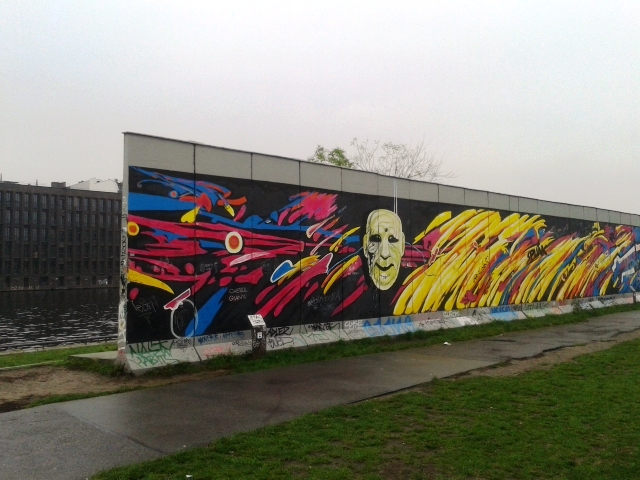
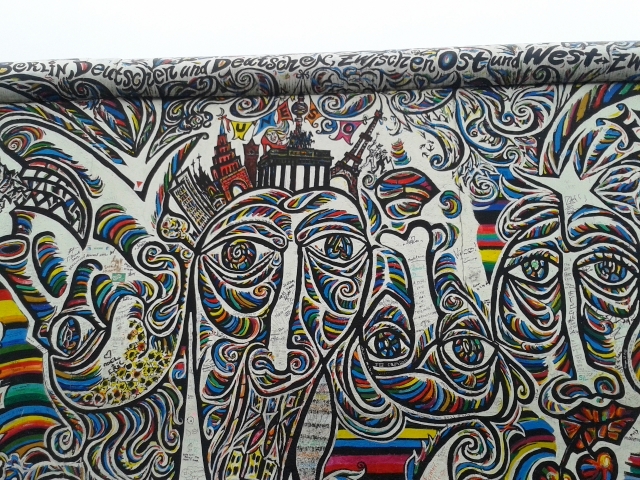
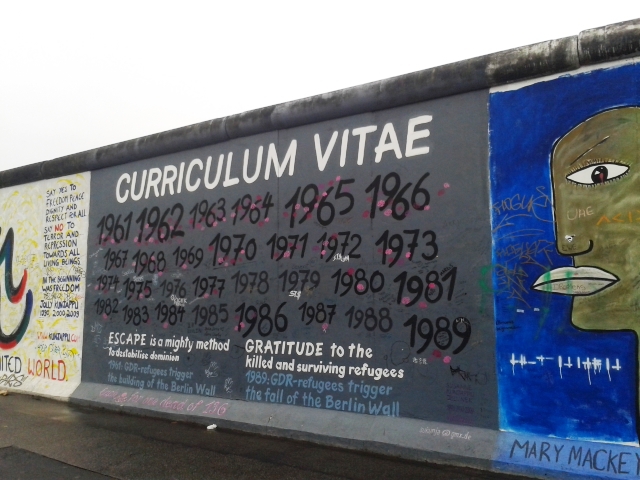
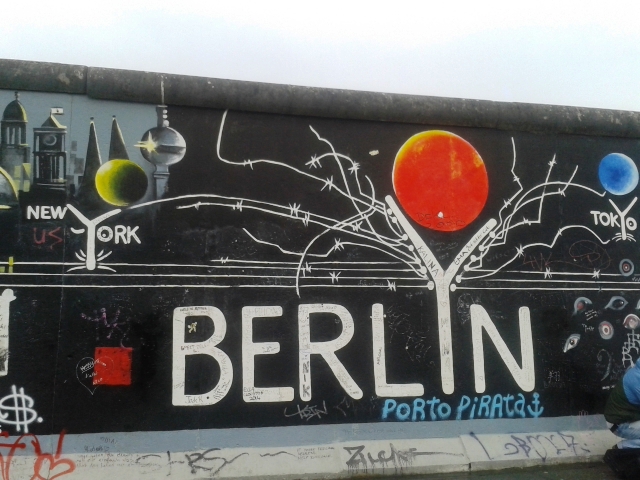
Today the Wall can be seen from many perspectives: you can learn interesting facts and stories visiting the Berlin Wall Memorial (free admission!), Topographie des Terrors, Checkpoint Charlie, or East Side Gallery – where all the featured photos were taken.

20141026_103519 20141026_103449

East Side Gallery, the longest remaining fragment of the wall, today sets the border between the multicultural neighbourhoods of Friedrichshein and Kreuzberg. East Side Galler hosts some great graffitis, mostly related to politics and history. It reminds us there are still many walls on this planet to be tear down…

20141026_103302 20141026_102729

Another interesting perspective on the history of the Berlin Wall was presented in a Polish documentary film called “Rabbit a la Berlin”, telling the story of the division and “no man’s land” or “Death stripe” from rabbits’ perspective. It is based on real happenings, as during years, rabbits found a perfect place to live in between the Berlin Wall.

20141026_102614 20141026_103605

Nowadays the Wall is long gone, but according to the latest HR research on salaries, Berlin still stands out as the poorest city in Germany. Salaries in Berlin can be up to 25% lower than in other cities. Interesting, as it’s been long enough as well to give Berlin the unofficial name of ‘Silicon Allee’ – innovative IT start ups’ capital.

20141026_105501 20141026_105605

‘Poor but sexy’ is no longer an excuse, as the cost of living grows unproportionally to the abovementioned salaries. We can see then, how much time it takes for a city to recover after such terrifying events and decisions.

20141026_105708 20141026_105843

However, as this year Germany celebrated 25 years from the unification, I hope this is a good moment for everyone to contemplate the history and its outcomes. I am proud to be living in Berlin, a capital which is maybe still very imperfect, but giving room for people with different backgrounds and ideas. Otherwise, it would still be so grey.