Jüdisches Museum Berlin

Long time, no write – I had a particularly intense month of October: visiting relatives in Bavaria, which was followed by unusually hectic days at work, and last but not least: a visit in Israel which leads me to the topic of describing the Jewish Museum of Berlin.
IMG_3877 IMG_3875

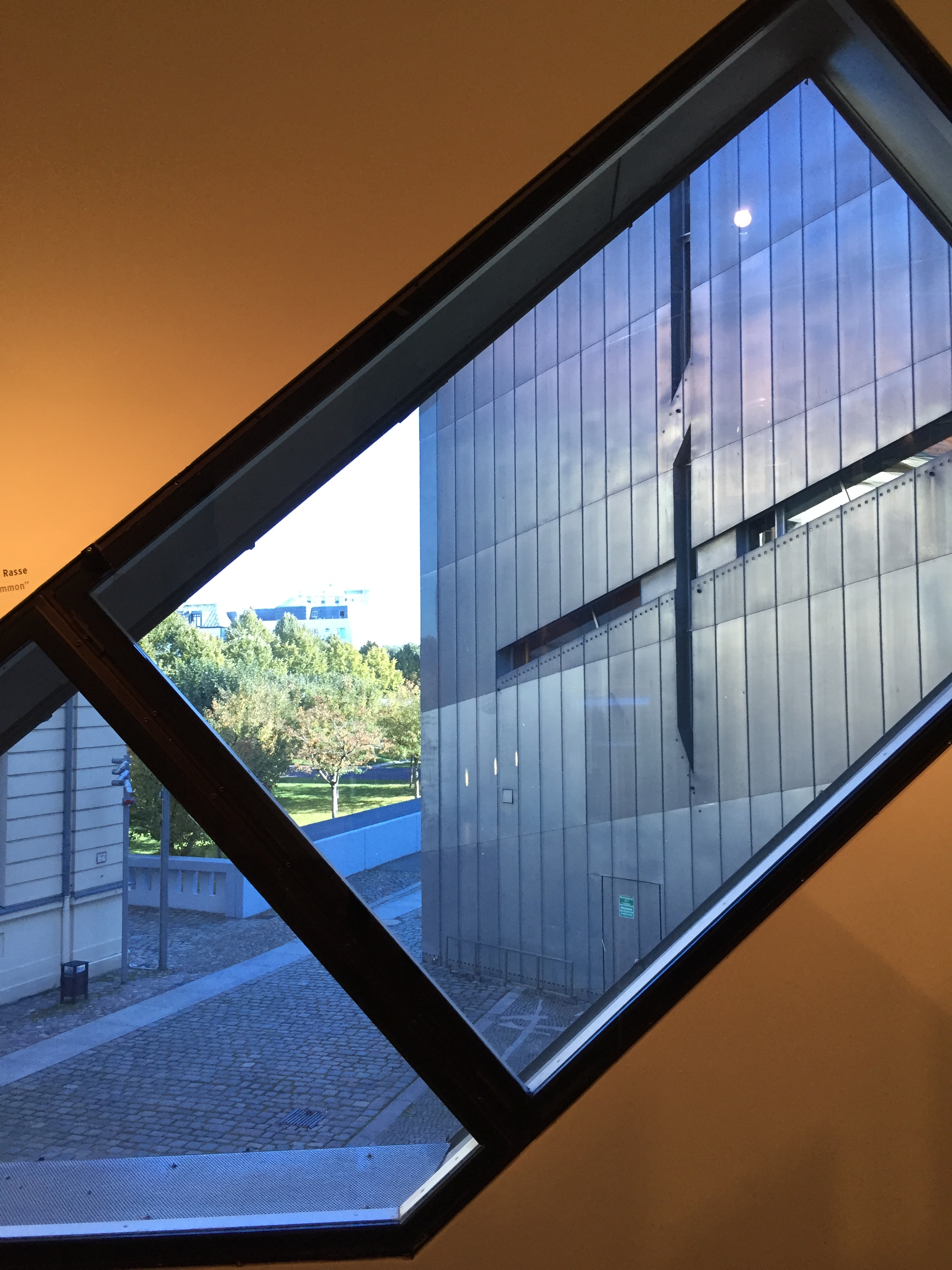
The museum is situated in between Mitte and Kreuzberg, and I remember it was one of the first museums I visited since relocating to Berlin. You just can’t miss it for its stunning architecture. But also, for unforgettable experience and a journey through the lives of Jews in Germany in almost 2000 years of perspective, similarly to the Polin Museum in Warsaw.
IMG_3892 IMG_3874

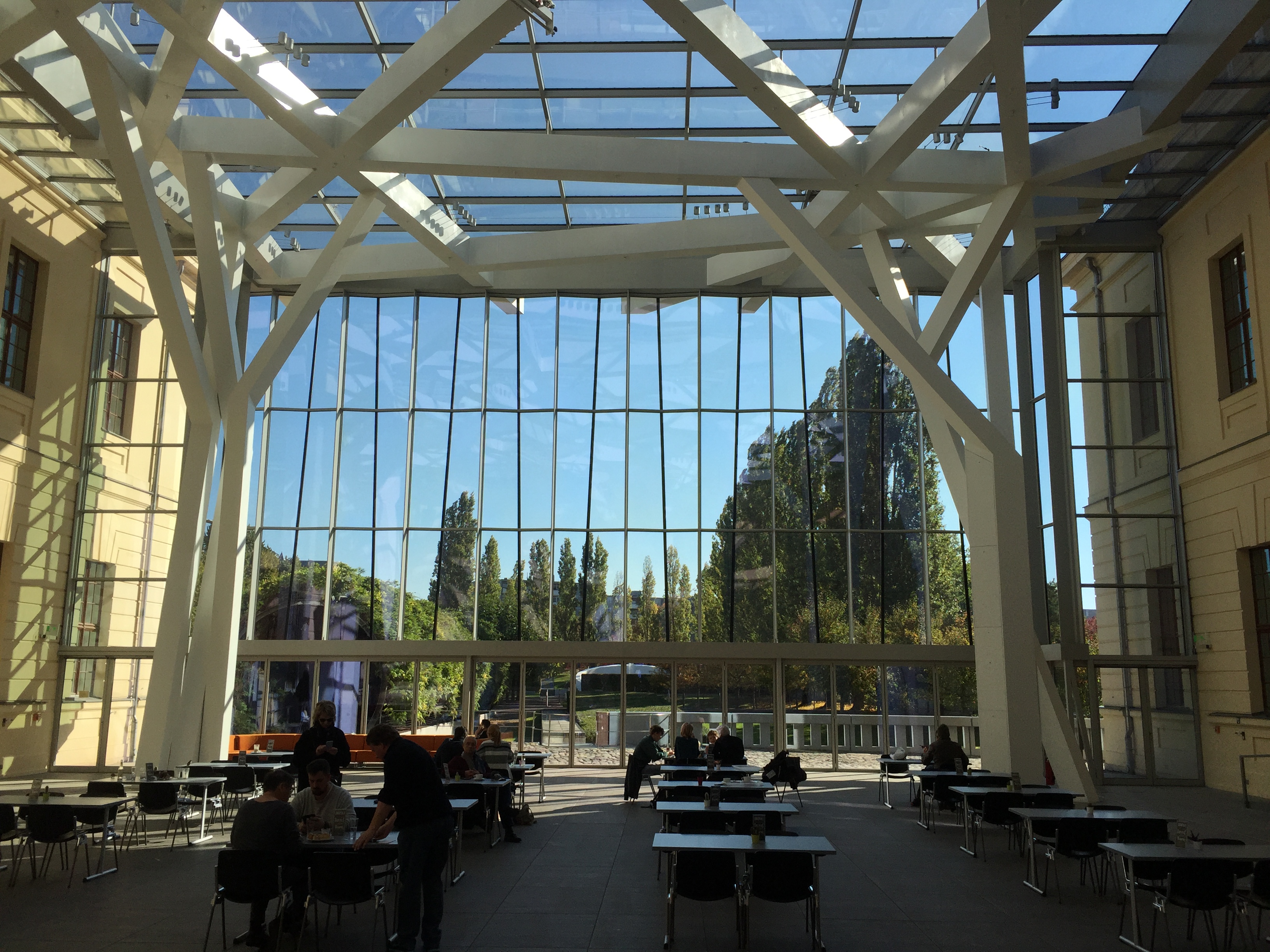
Jewish Museum of Berlin (JMB) consists of two buildings: Kollegienhaus and the new building designed by Daniel Libeskind, a Polish-American architect representing neo/post/modernism style. Libeskind’s building has different axes representing various epoques, and crucial moments for the Jewish diaspora in Germany. However, the most emotional and symbolic parts of the museum are represented by the void, a metaphore of the missing presence, as well as the sculptures of the Shalechet representing the screaming faces that can’t be avoided by the visitor.
IMG_3864 IMG_3863

Beyond the buildings, there is also a Garden of Exile where the olive trees grow on the soil of Israel, representing hope, but also confusing concrete blocks that are depicting the disorientation of the emigrants in the distant countries all over the world.

IMG_3891 IMG_3882

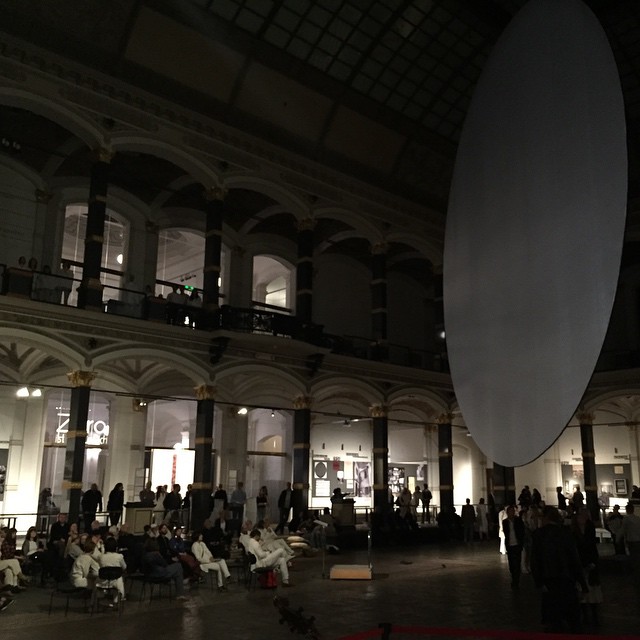
Nowadays, there are many events organized by the JMB, such as screenings of the movies, lectures, and temporary exhibitions. If you are in Berlin in November 2015, don’t miss Gehorsam (eng. Obedience) installation by Saskia Boddeke and Peter Greenaway.

IMG_3885 IMG_3868

There are 15 rooms inspired by the legends of Jewish, Christian and Islamic traditions and the drama of our times due to the conflicts of the above. All in all, JMB is a very special place to contemplate not only the history, but also stunning art, emotional states and metaphoric narration.

IMG_3889 IMG_3890

Krake – it’s all about music, not names

I don’t go to festivals nowadays. Normally. I’ve been to ADE, Sonar, among other big ones and I enjoyed it a lot. Truth is that now I don’t have as much energy nor time to stay a couple of days partying 24/7. Also, within time they all got way more commercial, and as a consequence – super expensive. There are 3 local Berliner festivals though I can’t think of skipping: CTM, Krake and Atonal. Next week, the second one will take over the city (Friedrichshein, to be precise, or Urban Spree area):

I am looking forward to the amalgamate of art, sound and good ambience. One of my very promising dark techno sound evangelist & artist friends, Enclave, showed me last year’s edition from Suicide Circus and I was amazed. I really liked the anti-festival vybe, meaning that instead of pricey tickets and hype about first two or three big names listed, there will be a mix of more or less unknown, but ambitious rising hopes of the electronic music scene. Here’s a documentary showing bits and pieces of 2014 Krake edition together with the ideology behind the venue:

So: where, when, what? Next week, starting from Monday 3rd August till Sunday 9th, Urban Spree area (together with Kantine am Berghain and Suicide Circus) will be taken over by the art of techno. You can check the detailed programme here. I am so much looking forward to the Friday and Saturday nights, alongside with the art exhibition and 29th Nov films. There’s an ongoing discussion in Berlin about how the electronic scene could reinvent itself, and move away from the overtly mainstream trend, while coming back to its very own alternative roots. Not sure why, anytime I think about the dying scene, and techno being a superficial platform, I always feel like this humanoid from this brilliant videoclip.

Sunday Funday in Berlin: now & then

Today is one of these days one can only expect the unexpected in terms of the weather in Berlin. Intervals of sun, rain, storm and wind vary and it is rather difficult to plan anything outdoor. But the summer has been pampering the Berliners so far – even to the extreme.

Sundays are never boring: either you go on with the party mode or you go on a nature retreat. Alone or with friends – up to you, this city adjusts to all prefered options, be it brunch by the river channel, sunbathing in one of the public swimming pools or city beaches, visiting museums and galleries or cycling around the city.

It’s fun to see that the city was very active and alive on Sundays many years ago too, in the pre-Nazi era in Berlin. A light-hearted film made by Robert Siodmak in 1930 shows a group of the amateur Berliners in a very Sunday Funday mood. Many of the places pictured in the movie are still a very popular locations for hanging around on a sunny Sunday. However, it’s very interesting to see how the city looked before the WWII and live the spirit of the epoque: strolling down the Nicolassee, falling in love and chilling by the lake shore with a gramophone, or play with the sausages (just check this out!).

The movie will be shown in the Freiluftkino Friedrichshein next weekend (25th July) but for those that for some reason won’t make it, or are stuck at home on this rather rainy day, I attach you below an English-subtitles spoiler. Happy Sunday everyone!

https://www.youtube.com/watch?v=7ooNxs68vk4

Zero ist der Anfang

Zero – a zone of silence and of pure possibilities for a new beginning. Taken from the 1957, this art manifesto still makes us think about the essence of art and its meaning nowadays. Times are as turbulent over 50 years ago, but maybe the society feels a bit more indifferent and lost in the stimuli coming from all over the place. The night o 11th April in Martin Gropius Bau proved the need for reconnecting with pure art, beauty in the collective experience.

To enter the all-night event it was recommended to dress in white. More importantly, it was for free then. The long queue to the museum’s entrance looked then very bold and elegant. Maybe a bit like the crowd from the ‘Clockwork Orange’ though. Zero was a manifesto created with a mission to reinvent and redefine art in the aftermath of World War II.

The collection gathered in Martin-Gropius-Bau Museum was rich in picturing the whole spectrum of the European movement around Zero, including works of Ives Klein, Enrico Castellani and presenting the history of the whole movement. The night of 11th/12th April gathered also musical interpretations of the Zero movement. I was simply stunned.

Zero manifesto could also be my own private summary of the past six month here in Berlin. Extremely active and always challenging my curiosity, both at my work and outside of it. Enriching my vision and insight. I found the taste of the solitude, with both its positive and negative connotations. Then meeting numberless people, with great life stories and visions. I embraced the darkness literally and metaphorically, and realized the preciousness of the light coming up next. All in all, I feel this city is a bit like me – non linear, reinventing itself, changing, at times hectic and centre-of-the-world-like, at times very slow-paced and melancholic.

Zero manifesto:

»Art is no longer the act of viewing a finished object; art has become a living process. It is realized in the empty human being. The picture itself has no meaning; it is merely a stimulus for the visualization of an idea, of an impulse.«

1660911_1046969241997361_8932754990105715114_n

Zero der neue Idealismus:

640px-ZERO-Manifest1