November and December days equal for a very dark season in Berlin. You wake up in the night, then work, then it’s night again. People have different ideas how to counteract the winter sleep and the tiresome feeling, and for me resorting to the overwhelming culture and events in Berlin seems to play the trick.
This year I have absolutely fell in love with the neon lights and the overall psychodelic atmosphere of the colourful Christmas markets, especially the one based in a normally very lonely and grey corner of Jannowitzbruecke. What a change, and for some reason it was synchronised very well with the premiere of the new Gaspar Noe’s movie ‘Love’ in 3D, and even more with his memorable ‘Enter the Void’.
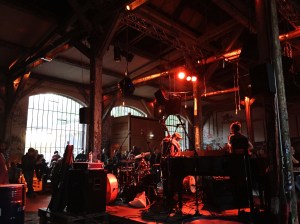
Last but not least, like always in December, I joined Feed Frequencies event in KW Institut of Art for a very special, pre-Christmas electronic Feierabend. Cosy matrresses, candles and clicks and snares made by Scott Monteith from Deadbeat and Prequel Tapes made it for a very special night.
So there are various ways to close off the year, and after some very intense weeks at work and in Berlin in general, I leave for a long-awaited natural retreat miles away, in the middle of the Atlantic Ocean, on the remote islands of Cape Verde. Stay tuned for more news on Lusofonetica very soon next year. Frohe Weihnachten und einen guten Rutsch ins Neues Jahr!
Cold days = getting sick. Getting sick = managing to read all the pending stuff I wanted to. A Pulitzer-winning author, Charlie LeDuff was one of those on the waiting list on my shelf. Detroit-born writer and journalist stole my sick days with his reportage ‘Detroit: An American Autopsy’. Although I have never been to Detroit, it’s on my travel list since ages. I have also watched tones of the documentaries about this fascinating city, such as:
Also, my fascination with the remote and abandoned places, urban apocalipse and related started a while ago. Only in Berlin though I realised how many stories of the ‘wounded cities’ that once used to be flourishing with industrial jobs are hidden in the abandoned factories and warehouses. Berlin is a perfect place of offering such places a second life, often linked to great cultural venues, such as Stattbad (no longer existing though), Kraftwerk and Tresor anyway, Berghain, Urban Spree and many more which I still did not manage to describe here. There is still a full list of horrifying, dreadful and yet absolutely fascinating decay buildings for me to discover.
So not only postindustrial images, but also the emerging creativity links Detroit with Berlin. Obviously, both cities offer strikingly different vision on the social welfare, and supporting the cultural scene, but the fact is that techno music was born in parallel both in Detroit, and in Berlin. It emerged from the painful history, and events. And from extraordinary creative energy. Some interesting facts are gathered in the following documentary:
Nowadays there are many DJs from Detroit based in Berlin as permanent residents, and enriching the techno culture. Berlin wouldn’t offer the sounds we hear nowadays, if it wasn’t for Detroit. So, being relatively in a better shape, thanks to the economy based on the tech and creative industry, Berlin owes a lot to Detroit.
It is hard to forget about the division between East and West, especially around 9th November, when Berliners celebrate the opening of the borders and, respectively, the Fall of the Wall in 1989.
Berlin Wall became the physical symbol of the Iron Curtain and even if nowadays the idea of the Cold War division within one city sounds so abstract, it was a painful reality for many Berliners for over 28 years.
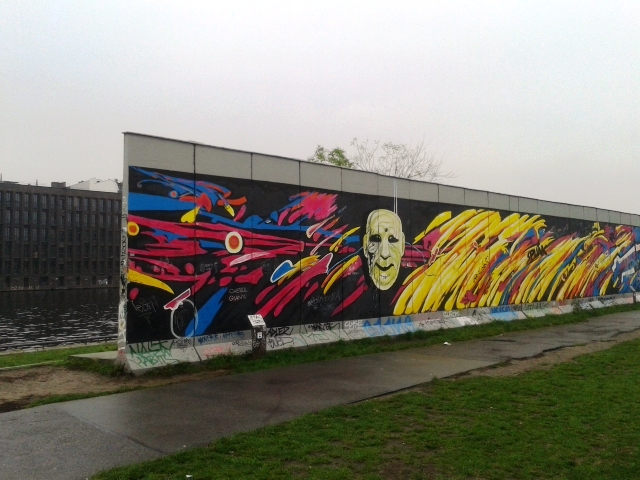
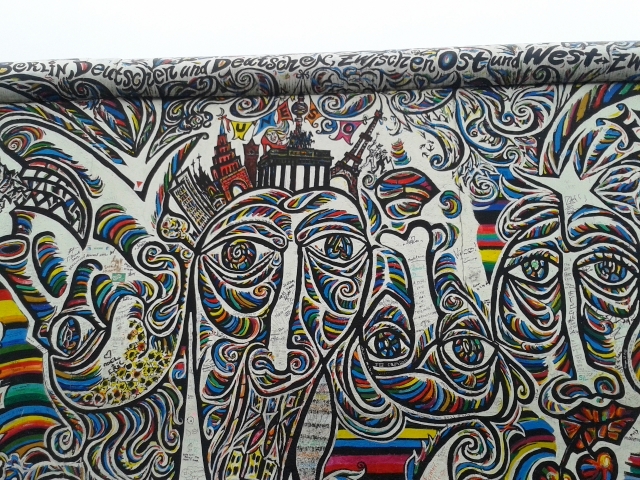
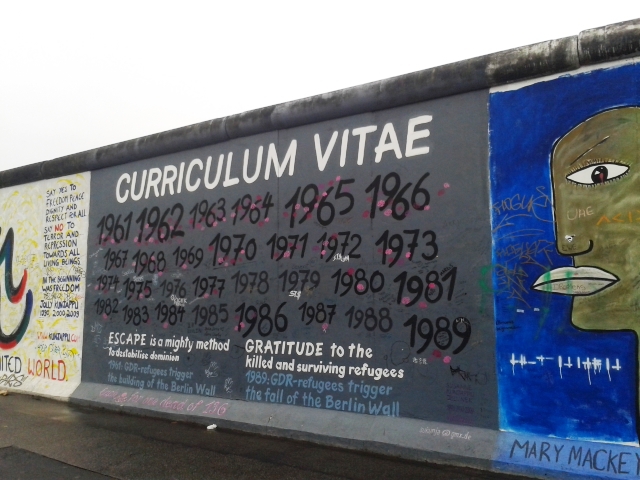
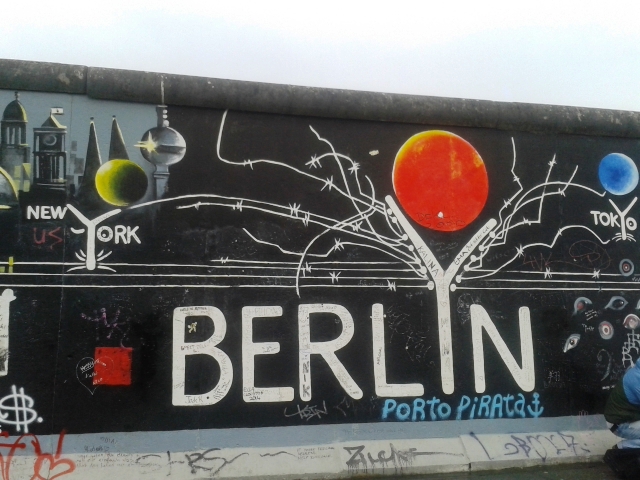
Today the Wall can be seen from many perspectives: you can learn interesting facts and stories visiting the Berlin Wall Memorial (free admission!), Topographie des Terrors, Checkpoint Charlie, or East Side Gallery – where all the featured photos were taken.
East Side Gallery, the longest remaining fragment of the wall, today sets the border between the multicultural neighbourhoods of Friedrichshein and Kreuzberg. East Side Galler hosts some great graffitis, mostly related to politics and history. It reminds us there are still many walls on this planet to be tear down…
Another interesting perspective on the history of the Berlin Wall was presented in a Polish documentary film called “Rabbit a la Berlin”, telling the story of the division and “no man’s land” or “Death stripe” from rabbits’ perspective. It is based on real happenings, as during years, rabbits found a perfect place to live in between the Berlin Wall.
Nowadays the Wall is long gone, but according to the latest HR research on salaries, Berlin still stands out as the poorest city in Germany. Salaries in Berlin can be up to 25% lower than in other cities. Interesting, as it’s been long enough as well to give Berlin the unofficial name of ‘Silicon Allee’ – innovative IT start ups’ capital.
‘Poor but sexy’ is no longer an excuse, as the cost of living grows unproportionally to the abovementioned salaries. We can see then, how much time it takes for a city to recover after such terrifying events and decisions.
However, as this year Germany celebrated 25 years from the unification, I hope this is a good moment for everyone to contemplate the history and its outcomes. I am proud to be living in Berlin, a capital which is maybe still very imperfect, but giving room for people with different backgrounds and ideas. Otherwise, it would still be so grey.
So, I can tick the box entitled “one year ago I started a new chapter in Berlin”. Here are some thoughts and learnings acquired during the last year:
Location: Berlin is the centre of the world. Oh well, Europe at least. Although the real airport might never be opened (?), it is relatively easy and cheap to fly anywhere in Europe, or connect with the transcontinental flights. I guess this year each month I did at least one weekend getaway abroad (little getaways to Poland and other German cities/sites included). I even went to one tip of the world: to Arctic, which was one of my dreams. It took me only 6 hours to get there though! But Berlin can be a little universe itself and it takes years to discover it fully.
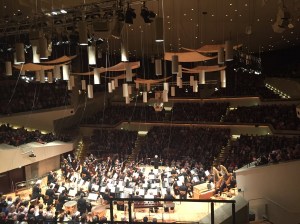
Cultural life: Apart from clubs, Berlin offers great museums and has more classical offer, like going to a concert in Berliner Philharmoniker or numberless operas or theatres. I particularly enjoy the evenings out in the modern dance companies spaces, like Sophiensaale or Radialsystem V.
Visitors: Friends still come and visit you, even if you don’t live at the beach (comparing to my previous life in Barcelona). It’s also pretty centric and easily connected, not to mention it takes me literally 2,5 hours to go to my home city in Poland.
(Job) Opportunities: The start up scene scent is still there in your nostrils, and it is very common to support the local innitiatives and emerging products. Even though the job market is very dynamic, comparing to other German (European) cities, salaries are not amazing. For now the cheap life has been paying off enough, but seems that each year the frequency of using the G-word (‘gentrification’) in different contexts is rising.
Language: German is not as vicious as they say it is. It took me one year to land somewhere near the B2 level, which means I can easily read the newspapers, understand most of the TV shows, sometimes even go to the cinema and most importantly have a conversation. I still don’t feel too comfortable talking to newly met people, especially if the music is loud, you know. In 2016 this should be OK-ish!
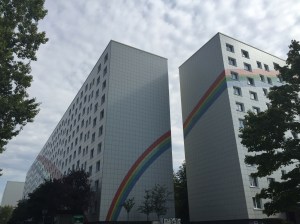
Architecture: So once upon a time, it was all about the Post-War, post-industrial abandoned buildings both on the “East” and “West” side. Berlin is much more than that. There are few cities offering the rainbow on a block of flats’ facade, aren’t they?
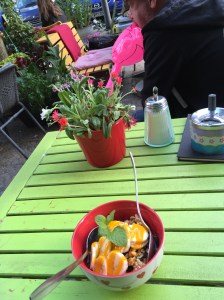
Cuisine: Monday – Vietnamese, Tuesday – Israeli, Wednesday – Spanish tapas, Thursday – Russian, Friday – Indian. Next week you can replace this selection with any other cuisine, and you will find the place to eat out within 1 km radius, I am pretty sure. Berlin is heaven for foodies, and it is still very cheap!
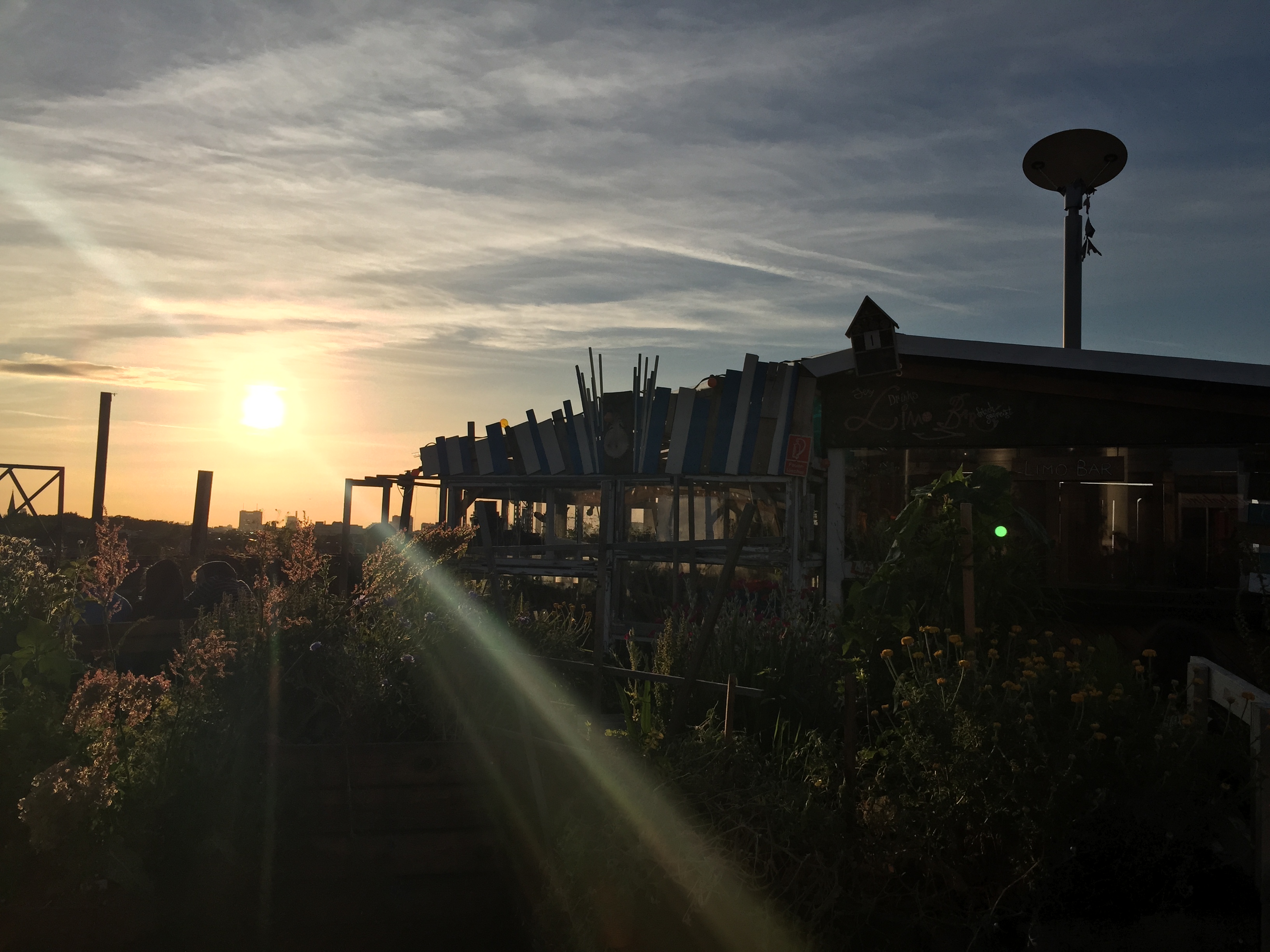
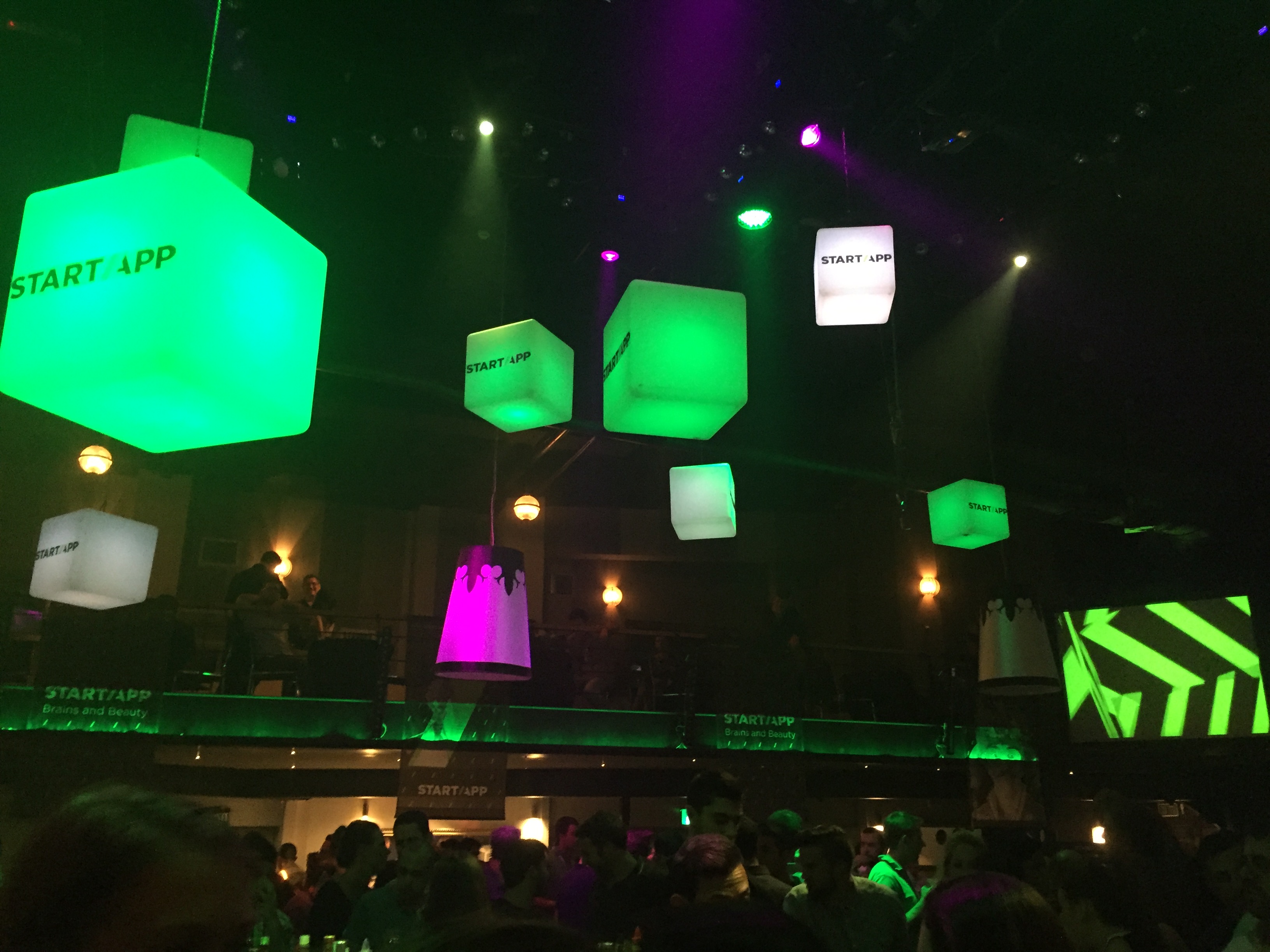
Lifestyle – described as “whatever works”. Questioning the normality, creative mindset and open-mindedness is probably what I like most about living in Berlin. History of Berlin had it all: pain, tears and joy. When nothing is taken for granted, many things can happen… Like these urban gardens in the centre of the city, or the club opened on the commercial centre’s rooftop.
Yes, Berlin is probably overrated, but it is still the best place in above-mentioned terms I’ve lived in so far (sorry, Barcelona, you are also awesome and I miss you badly!!!).
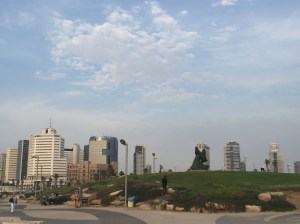
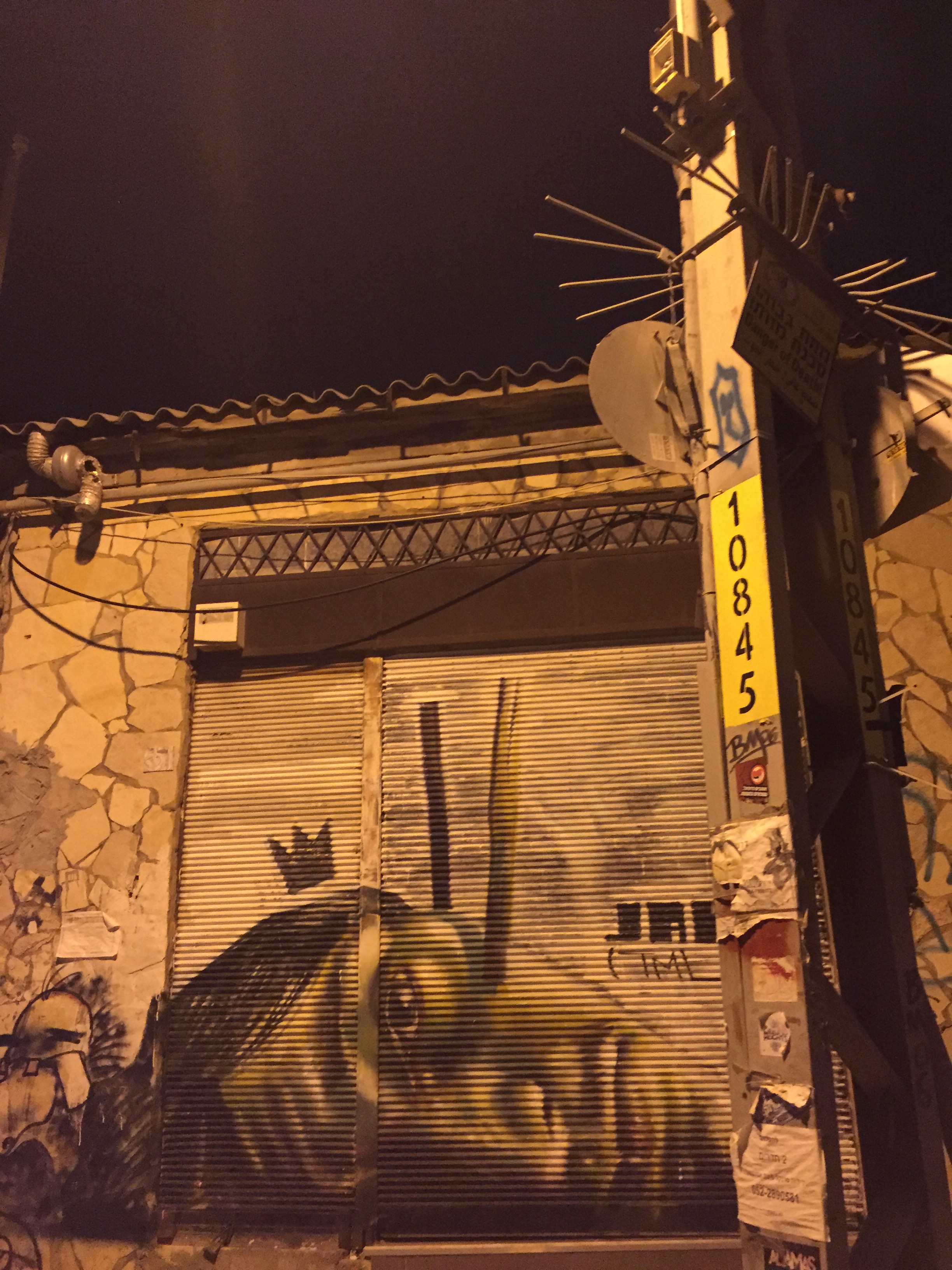
Last week I returned from the conference Casual Connect which took place in the bustling city of Tel-Aviv. This is why I would like to share my impressions on its mobile start up scene and its day/night (or rather 24/7) lifestyle, which resonates so well with the Berlin state of mind.
Tel-Aviv has no ancient history comparing to other places in Israel (except from the Old Town in Jaffa), and its architecture has been mostly inspired by modern creators, hence if you love Bauhaus – it is your dreamed destination.
Tel-Aviv is weird and fascinating at the same time. It’s small enough to walk everywhere. Maybe that’s why the underground nor tram connection has not yet been built?
It is indeed full of life, and full of one-of-its-kind districts: just like Berlin! (Or Barcelona. Or any emblematic city).
I deliberately stayed in the left-wing, sort of dodgy area in between Florentine and Neve Tzedek (the oldest Jewish settlement in this area). While during the day I was hanging around the posh centre, where the conference took place.
I met a lot of developers and designers who were very familiar with Berlin – and many of them expressed openly the will of relocating. Why would you do so if you live in the Mediterranean metropoly offering awesome quality of life, and most importantly: pleasant climate? Well, the answer is not that direct.
Although Tel-Aviv has traditionally stayed untouched from the Middle East conflict, the tension has grown again during the past few weeks. Another reason is that for young talents it is not so easy to afford the living in Tel-Aviv. Prices are twice as higher as in, for instance, Berlin if you take rent, or eating out into account. The region offers though certain priviledges for the start up entrepreneurs, and recently set up its visa-waiver programme for acquiring foreign empoyees, especially in tech.
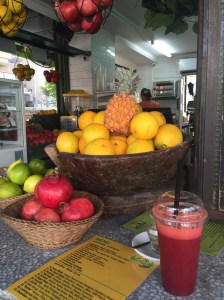
As for the quality of life, and food especially, my life is no longer the same after visiting Israel. Fortunately, nearby my office in Berlin I can regularly eat out (cheaper!) traditional Israeli menu, but it is not the same under the grey, autumn skies. And me, having lived some 4 years in Barcelona, I’m a sucker for the sun!
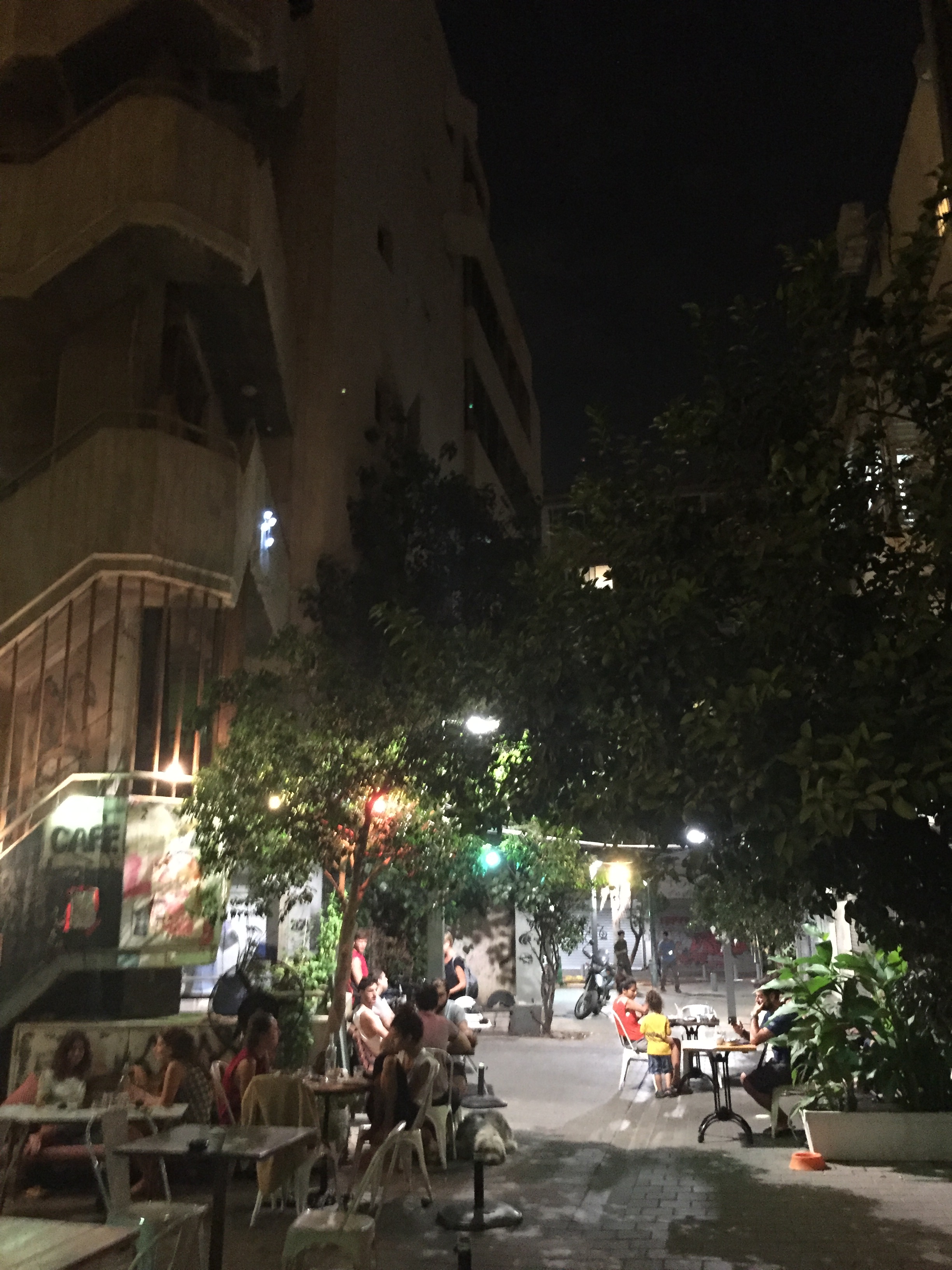
All in all, I was enchanted by the spontaneity of the night life and art scene. It felt like going around Potsdamer Platz in the times of first Tresor, which is a great metaphore for the hidden treasures.
I am pretty sure it would require at least one more visit in Tel-Aviv to describe the whole picture and variety of it, this time I would only say that there is definitely one similarity among the start up hubs: the neverstopping buzz!
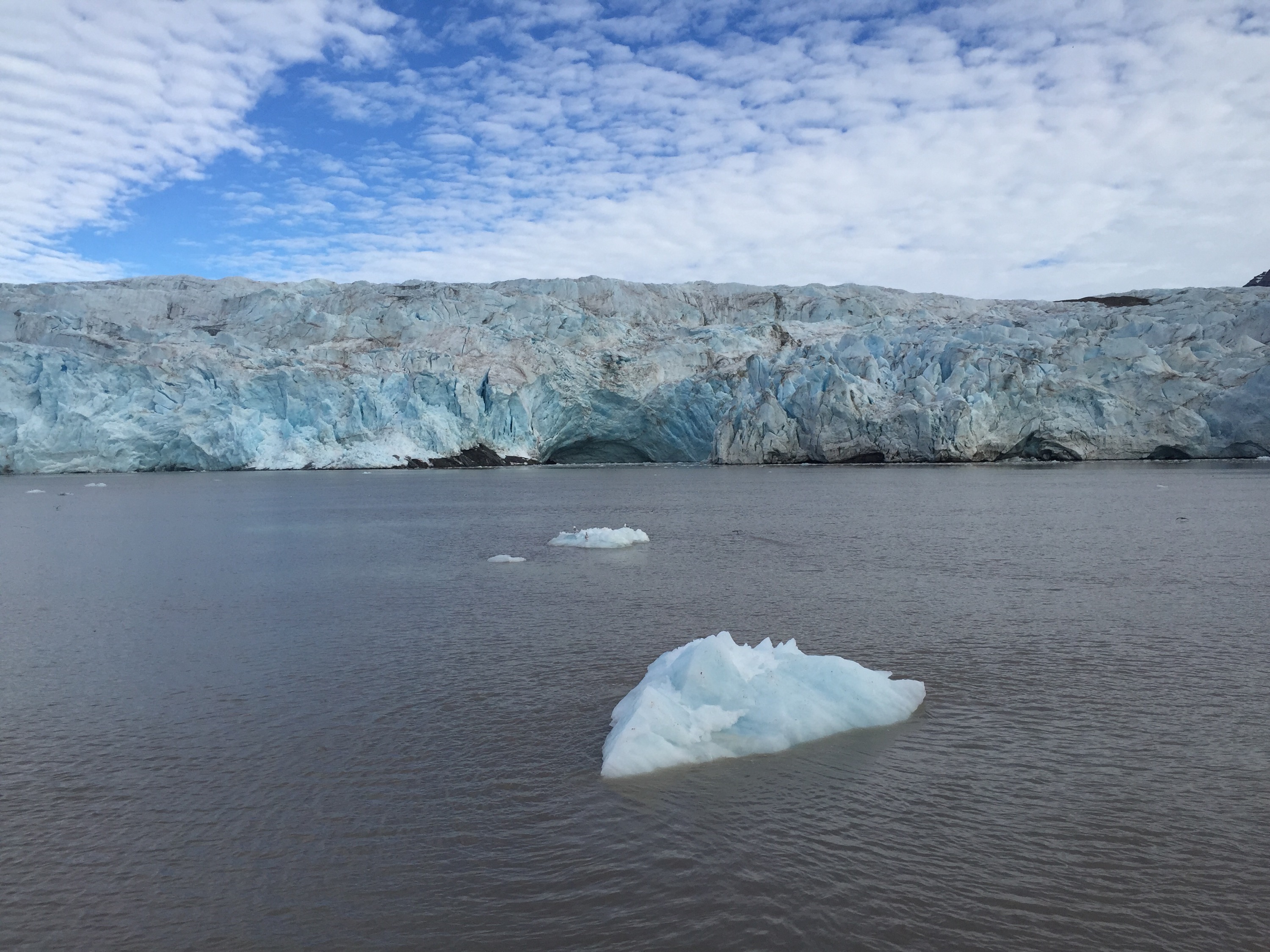
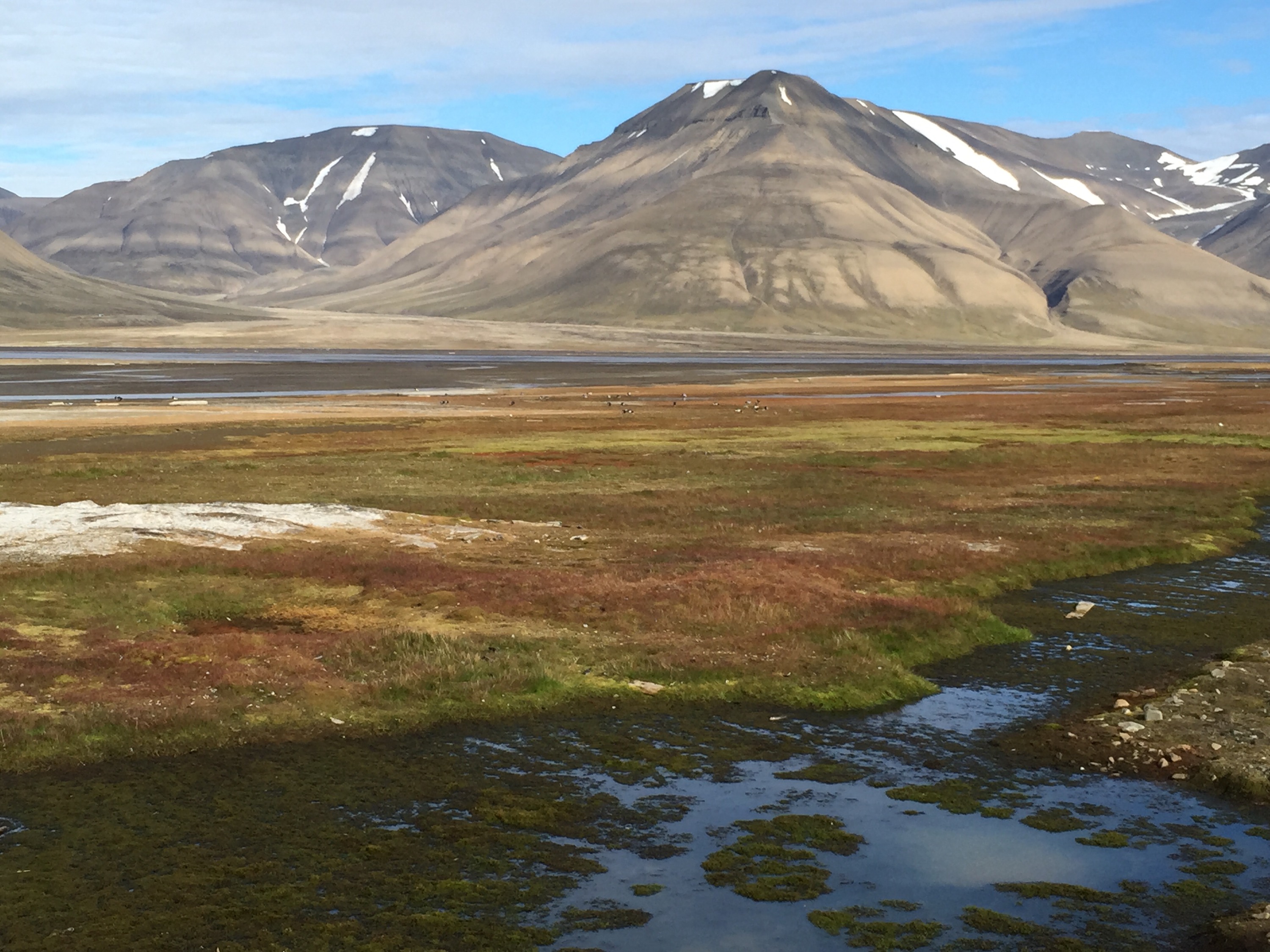
It all started a year ago when I was still living in Barcelona, so there’s not much connection to my everyday Berlin reality within this odd-ball post, except from that I did wanted to escape badly the heat wave in Europe. Around the time I visited Iceland in June 2014, my Danish colleague told me about spending last Christmas time even more drastically North: on Svalbard. Since then, my wandering soul stayed uneasy and there was no turning back for me: I knew I had to go to the Northernmost settlement in the world, sooner or later. I started studying about Svalbard, and looking for the best opportunity to go there as a tourist. Pardon me, a traveller. Being a tourist on Svalbard means something very disrespected and stupid.
I read about moving to and around the island, paying attention to the safety regulations, and protection against the polar bears. Though polar bears are considered endangered species, they are actually quite often seen on Svalbard, so it’s better to walk protected with a riffle (asking the governor for a renting licence prior to your visit). Or with a guide. Or with a newly acquired friend in town who owns a riffle, there are plenty of options to organize your activities there actually. Bearing in mind that the mighty nature is always the most important governor of the island!
Although Svalbard is still a very remote and wild place to go, I have to say it’s pretty well-connected now with the rest of Europe. In the summer time there are about 2 daily flights directly connecting the airport in Longyearbyen with Oslo, in the winter time there’s a daily flight from Tromso in the northern Norway. Longyearbyen, currently the largest town in the archipelago of Svalbard, on its largest island – Spitzbergen offers a wide range of hostels and hotels – from sharing a dorm with some other adventurers in a former coal miners’ lodge to 5-star hotels, like Radisson Blue or Mary Ann’s Polarrigg Hotel (with a very quirky look). So all in all, to go to the Northern tip of the world from my flat in Berlin took me maybe 7 hours in total. Quite surreal, isn’t it?
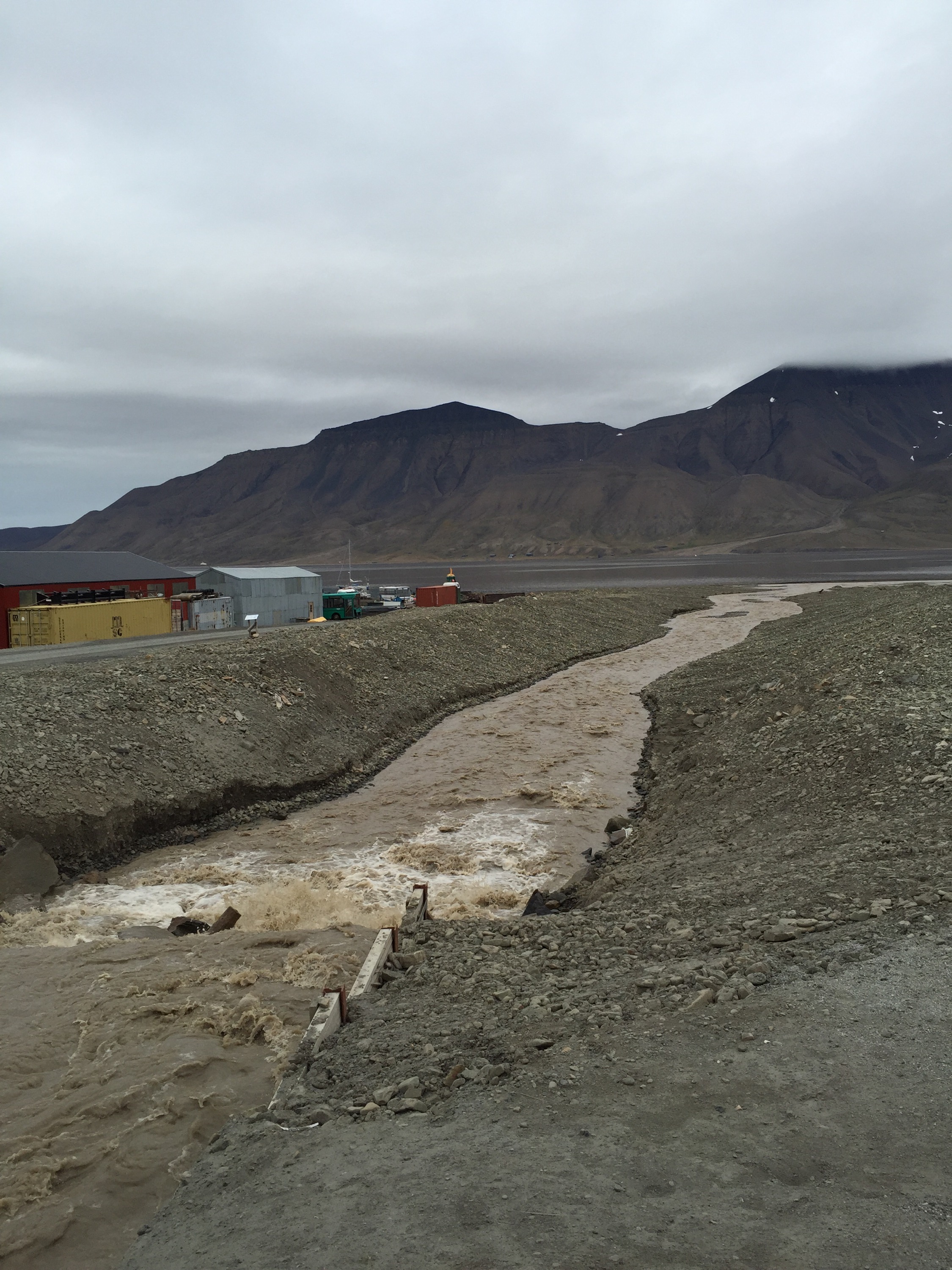
While the heat was treating the continent quite cruelly last week, I spent some lovely Arctic summer days: hiking on the Spitzbergen’s mountain ranges, sailing and kayaking around the fjords and Russian settlements, birdwatching or exploring the abandoned buildings on my own.
It’s not a trip for everyone. The place is pretty different to anything you’ve seen so far, and the conditions on the sea/in the mountains can get quite hostile. You have to respect the local customs and the nature, trying best to behave like an invisible tourist, which is often repeated in the informational brochures. The alcohol is very cheap as for the island being a tax-free zone, but in order to prevent tourists behaving like jerks, you have to carry your boarding pass whenever you’re buying a booze, as the quantity of what you drink is noted, and eventually – counted. Well, not really – and for the intoxicated tourists there’s a unique cell prepared too by the local governor – and I’ll definitely write about it in my next post featuring the usual day in Longyearbyen. I’ve learn best that there is no such thing as crime out there, just plenty of tourists that can spoil last pieces of wilderness on Earth. So once again: thumbs up for travelling, not being a tourist.
Two weeks ago, quite spontaneously, I decided to visit Polish coast within the train reach and I landed in Miedzyzdroje on the Wolin Island. This post have totally surpassed my expectations and here we are, two weeks later, with a bunch of my friends living in Berlin, asking for the Baltic Sea destinations worth recommending both on the German and Polish side.
So this time I decided to check out the seaside town from my childhood memories: Mrzeżyno, where my parents use to have a tiny cottage and since then, regularly visited. In short: 90s music, arcade games on rainy days, fish and chips and friends I played football and watched FIFA World Cup 1994 with. Like in the Roots Manuva’s ‘Dreamy Days’: this used to be fun and lots of laughter. Surprisingly, some things have not changed at all, while the time has passed.
The port where Rega river enters the Baltic Sea (or: the other way round, when the sea is as rough as today) is now completely refurbished and offers great sights during the sunset. For those who like more active tourism, it’s also great for renting kayaks and discovering West Pomerania’s treasures (including a medieval towns such as Trzebiatów). The port also offers now yacht marina, and fresh fish for the hungry ones. I still remember when Mrzeżyno was a very isolated town in between two military bases, and quite undeveloped infrastructure in the 90s. These times are long gone, hence there are crowds of Polish families. Don’t go there in the high season if you search for remoteness!However, there is a very interesting techno festival proposal coming up in August: Plötlzlich am Meer (Eng. Suddenly by the Sea, PL: Nagle nad Morzem) – yet another edition of the Polish-German Electronic Music festival on the beach of Rogowo, one of my all-time faves. It’s probably best to book the trip in advance and rent a car, but if one’s well-determined, this place can be reached by the combination of train + bus, plane + bus, whatever + hitch-hiking, etc.
And then, suddenly, by the sea, interesting things may happen!
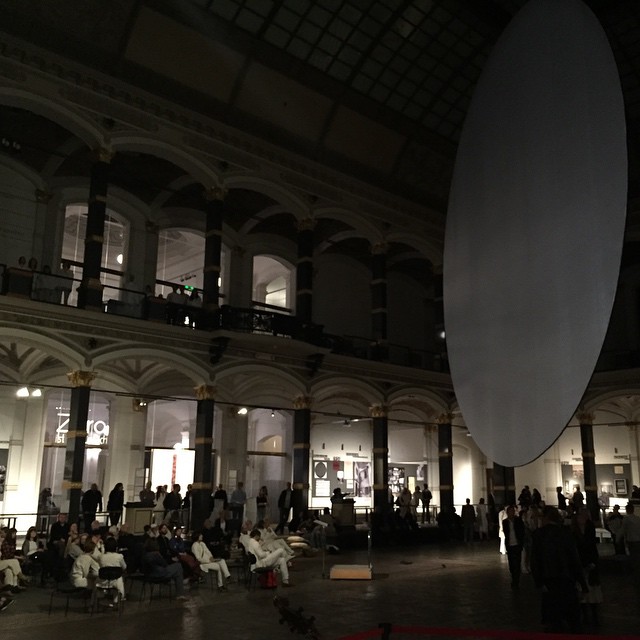
Zero – a zone of silence and of pure possibilities for a new beginning. Taken from the 1957, this art manifesto still makes us think about the essence of art and its meaning nowadays. Times are as turbulent over 50 years ago, but maybe the society feels a bit more indifferent and lost in the stimuli coming from all over the place. The night o 11th April in Martin Gropius Bau proved the need for reconnecting with pure art, beauty in the collective experience.
To enter the all-night event it was recommended to dress in white. More importantly, it was for free then. The long queue to the museum’s entrance looked then very bold and elegant. Maybe a bit like the crowd from the ‘Clockwork Orange’ though. Zero was a manifesto created with a mission to reinvent and redefine art in the aftermath of World War II.
The collection gathered in Martin-Gropius-Bau Museum was rich in picturing the whole spectrum of the European movement around Zero, including works of Ives Klein, Enrico Castellani and presenting the history of the whole movement. The night of 11th/12th April gathered also musical interpretations of the Zero movement. I was simply stunned.
Zero manifesto could also be my own private summary of the past six month here in Berlin. Extremely active and always challenging my curiosity, both at my work and outside of it. Enriching my vision and insight. I found the taste of the solitude, with both its positive and negative connotations. Then meeting numberless people, with great life stories and visions. I embraced the darkness literally and metaphorically, and realized the preciousness of the light coming up next. All in all, I feel this city is a bit like me – non linear, reinventing itself, changing, at times hectic and centre-of-the-world-like, at times very slow-paced and melancholic.
Zero manifesto:
»Art is no longer the act of viewing a finished object; art has become a living process. It is realized in the empty human being. The picture itself has no meaning; it is merely a stimulus for the visualization of an idea, of an impulse.«
Das Frühlingsopfer – this the German title of Igor Stavinsky’s ‘The Rite of Spring’, a masterpiece which pictures best by far the uncertainty and drama of the current season. Spring as a process within human minds and the slow rebirth of the nature can be painfully difficult. It is a struggle when sometimes there is no energy left to overcome the drastic changes. There are no better words and sound notes to illustrate this moment in my life, so I’d love to dedicate this post to my dear friend I suddenly lost few days ago in tragic circumstances.
Thinking about the loss as a process of life can be helpful till certain extend to accept its dark shades and harsh moments. I give myself time to think about the value of pain, grief and irreversible flow of time and space. I question the things I take for granted. I keep the moments I happily lived with him and think about the values he appreciated the most. In search for the answers and gathering the thoughts, I find it Stravinsky’s music especially close to the state of mind I am in. Not without sense, Le Sacre du Printemps is a musical journey through the idea of the sacrifice, the reinventing the seasons and yet, the usual process that takes place each and every year.
Knowing that my friend loved theatre, art and whole range of earthly pleasures and beauty so much, I would love to dedicate him Das Frühlingsopfer in this revolutionary Berliner Philharmoniker version directed by the living legend of the Kammermusik, Sir Simon Rattle. He didn’t make it to pay me a visit in my new city and I did not show him my favourite places that I promised him in my last e-mail. There is nothing else left now than appreciating the beauty of life while we are here and now in this amazing universe.
On a sunny 1st day of January together with my visiting friend, we decided to discover one of the most quirky building in Berlin: Teufelsberg Abhoerstation. Back in a day it used to serve as CIA’s listening station, even though it was maybe not the most discreet Cold War time place one could imagine. Nowadays it’s owned by a private investor, turning slowly but surely into a derelict building.
Located in the Western part of the city, it is easily accessible by S- and U-Bahn (the closest station: Heerstrasse) and 30 minutes walk through the Grunewald forest. Teufelsberg (literally translated as: Devil’s Mountain) is an interesting place itself, given its origin. This highest peak of Berlin was constructed on the ruins dating back the II WW.
The easiest but not cheapest way to access the Listening Station is to take part of the tour which gathers every full hour and costs 7 EUR per visitor. There are also night tours offered with a more detailed description of the history. During the tour one can enter the building, including the highest standing tower. From my perspective, I would recommend wearing warm clothes and a lantern as there are strong winds and not all the staircases are lit up by the daylight.
This mysterious, abandoned place leaves our imagination play with what sort of messages were circulating in the Station back in the day, and offers spectacular views over the magic skyline of Berlin. Way to start 2015!




























 Berlinering